TL;DR Quick Answers
Waterless soap
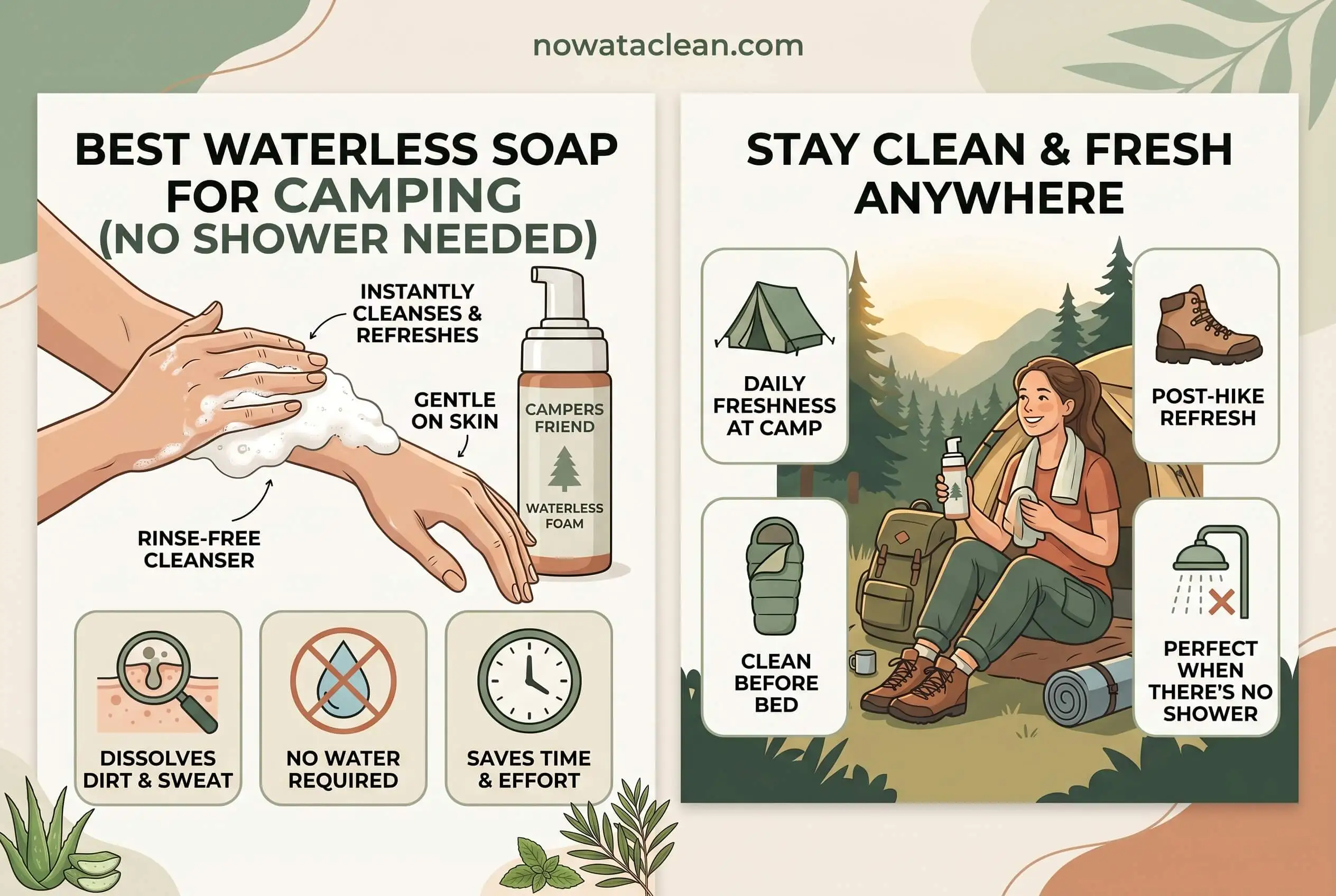
Waterless soap is a rinse-free cleanser that cleans your skin without any water. Unlike hand sanitizer, which kills some germs and leaves residue behind, it binds dirt, oil, and germs into tiny clumps you brush or wipe straight off your dry skin.
How to use it: Rub a dime-sized drop onto dry hands, then brush off the clumps. No sink or rinse required.
Best for: Camping, hiking, travel, and anywhere a sink isn't within reach.
What to look for: Plant-based, biodegradable, alcohol-free formulas backed by real lab testing.
Good to know: It's built for hands and quick spot-cleaning, not a full-body shower replacement.
Top Takeaways
Waterless soap cleans your skin without running water, a rinse, or a towel.
It lifts away dirt and oil, which sanitizer can’t do and wipes do messily.
Clean in order: hands, then face and underarms, then feet, then hair.
Pick plant-based, biodegradable, alcohol-free formulas backed by real testing.
Keep all wash water at least 200 feet from lakes, streams, and trails.
How to Stay Clean While Camping Without a Shower
Waterless soap, sometimes sold as no-rinse or rinse-free soap, does the same job your bathroom bar does. Soap cleans because surfactant molecules grab onto oil and dirt so you can carry them away. That’s the chemistry behind any soap. A waterless formula just drops the rinse step. You rub it into dry skin, and it binds the dirt and oil into small clumps you brush or wipe straight off.
That sets it apart from hand sanitizer, which kills some germs but leaves residue and never removes the dirt already on your hands. It also beats body wipes for everyday use, since wipes pile up as trash you have to pack out. Treat waterless soap as the workhorse for your hands and quick spot-cleaning.
A realistic no-shower routine runs in this order:
Hands first. Clean them before you cook and after you dig a cat hole. Most trail illness starts and stops right here.
Face, neck, and underarms. One quick pass each morning resets how you feel more than anything else on this list.
Feet at night. Clean, dry feet head off blisters and the funk that can take over a tent.
Hair when it needs it. A dry shampoo soaks up the oil between real washes.
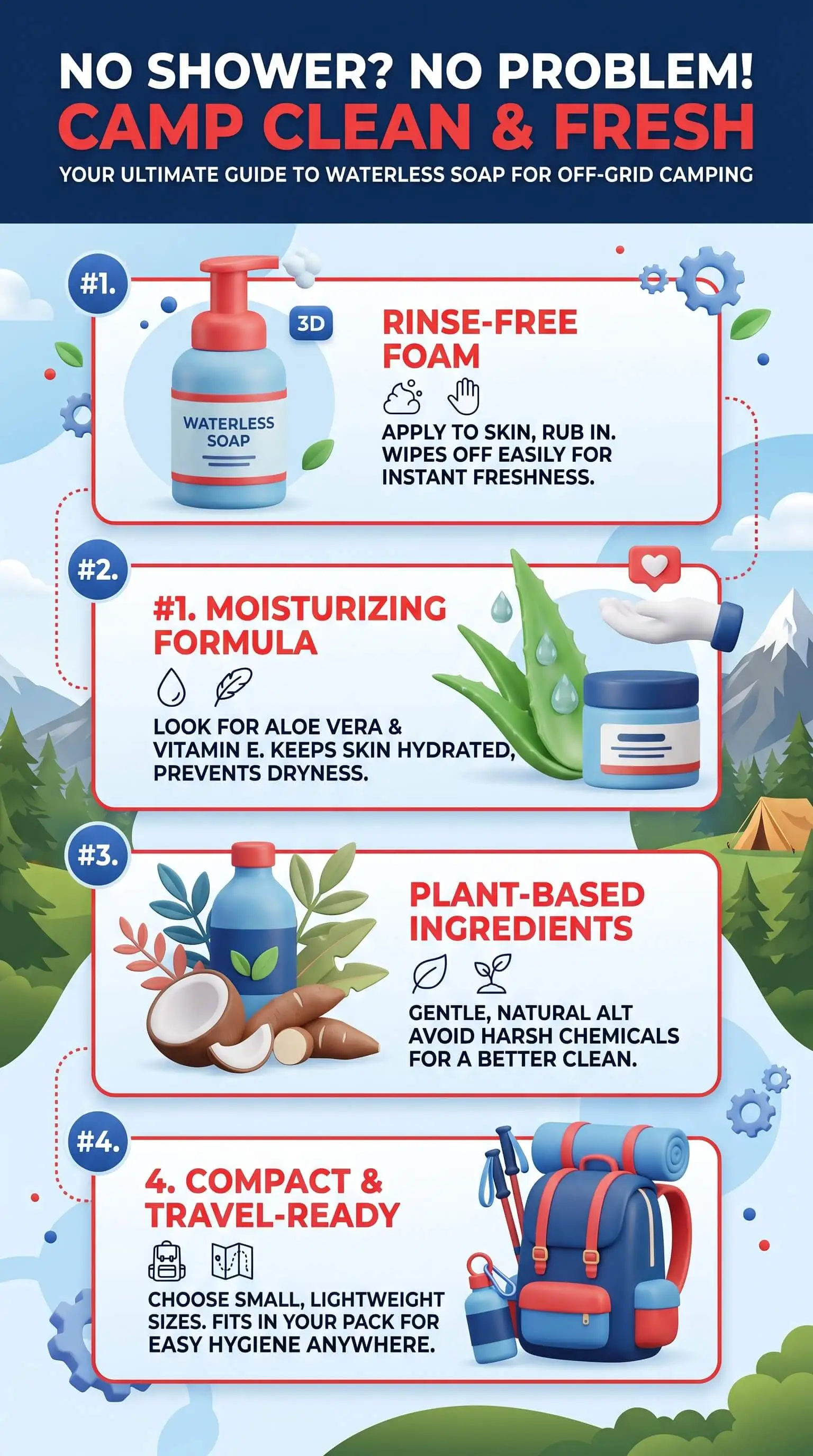
When you shop, five things matter. The soap has to clean with no rinse and stay gentle enough to use daily, so look for a hypoallergenic hand soap made with plant-based, biodegradable, and alcohol-free ingredients that won’t dry out or sting your skin. It should pack small enough for a carry-on. And the claims on the label should come from real testing, not a marketing page.
One soap that clears that bar is NOWATA, a doctor-made, plant-based rinse-free soap. A dentist and a biomedical-engineering PhD built it, and an independent Swiss lab put it through a modified ASTM E1174 test, where it physically removed more than 99.9% of E. coli and a norovirus surrogate from skin. It works even when your hands are caked in trail dirt, it’s biodegradable and alcohol-free, and one tube gives you roughly 80 to 100 washes. One honest caveat worth stating plainly: this is a rinse-free hand and spot-cleaning soap, not a stand-in for a full-body shower. Pair it with wipes for your body and a dry shampoo for your hair, and you’ve covered everything.
“The first time I ran a four-day route with nothing but a tube of waterless soap, I figured I’d feel grimy and miserable. The opposite happened. Clean hands before every meal meant nobody picked up the stomach bug that usually shows up by day three, and I stopped treating no-rinse soap as a comfort item and started treating it as the cheapest insurance in my pack.”
7 Essential Resources
Want to go further on healthy, low-impact hygiene outdoors? Start here:
Leave No Trace: The 7 Principles. Start here for the framework on low-impact recreation, including how to handle waste and wash water.
National Park Service: Leave No Trace Seven Principles. Use this official park-service summary anywhere, wilderness or frontcountry.
REI Expert Advice: Leave No Trace. It covers disposing of rinse water and keeping greywater away from lakes and streams.
CDC: Handwashing Facts and Stats. See the science on why clean hands prevent illness, and why soap beats water alone.
EPA WaterSense: Showerheads. Check how much water a normal shower uses, which puts the waterless approach in perspective.
Wikipedia: Soap. Read a clear primer on surfactants and how soap lifts dirt and oil off skin.
The Dyrt: 2025 Camping Report coverage. See current trends on who’s camping and how crowded the outdoors has become.
3 Statistics
23 to 40% fewer diarrheal illnesses. Community handwashing education cuts diarrheal sickness by 23 to 40% and respiratory illnesses like colds by 16 to 21%, according to the CDC. A long way from a clinic, that margin matters.
2.5 gallons every minute. A standard showerhead pushes out about 2.5 gallons of water per minute, per EPA WaterSense. Skip the rinse for a weekend and you save water you would otherwise have to carry or find.
81 million campers. More than 81 million Americans went camping in 2024, according to The Dyrt’s 2025 Camping Report. That’s a lot of people who, at some point, will be a long way from a working shower.
Final Thoughts and Opinion
If I could change one belief about camping hygiene, it’s the idea that you need a shower to be clean. You don’t. You need clean hands, a fast way to freshen the spots that sweat, and the discipline to keep washing water away from streams and lakes.
My honest opinion after a lot of trail miles: the best waterless soap isn’t the one with the loudest label. It’s the one you’ll actually carry and use. Build the three-part kit: rinse-free soap for your hands, dry shampoo for your hair, and wipes for the rest. That setup weighs almost nothing and keeps you healthy and comfortable for days. Respect the land while you do it, and you won’t miss the shower.
Frequently Asked Questions
What is waterless soap and how does it work?
It’s a no-rinse cleanser. Surfactants bind the dirt and oil on dry skin, then the grime lifts or wipes off with no water at all.
Does waterless soap actually get you clean without water?
For hands and spot-cleaning, yes. It removes grime instead of just masking it, though it won’t replace a full-body wash.
How do you wash your body while camping with no shower?
Use waterless soap on your hands and the high-sweat spots, a dry shampoo on your hair, and biodegradable wipes for the rest.
Is waterless soap biodegradable and Leave No Trace friendly?
The good ones are. Look for plant-based, biodegradable formulas, especially when cleaning up after handling hard surfaces in garden design like stone paths, pavers, edging, or outdoor planters, and still keep any wash water well away from natural water sources.
Waterless soap, body wipes, or hand sanitizer: which should I pack?
Make waterless soap your main cleaner, carry wipes for your body, and keep sanitizer as a backup, since it doesn’t remove dirt.
Can I bring waterless soap on a plane?
Usually, yes. Most travel tubes come in under the 3.4-ounce TSA limit for carry-on liquids, but check the size before you fly.
Pack Lighter and Stay Fresh Off-Grid
Your next trip doesn’t need a shower. It needs the right kit. Start with a tested waterless soap for your hands, add a dry shampoo and a few wipes, and you’ll spend less time feeling grimy and more time where you actually want to be. Pack NOWATA on your next trip and find out how clean no water can feel.