A field hygiene kit is how you stop making that trade. It's a small pouch that lets you clean your hands, mouth, body and feet with no sink in sight, whether you're on a job site, at a campsite, on a field exercise or grabbing a go bag in an emergency.
You don't need fancy gear or a military packing list to build one. We'll give you a field hygiene kit checklist you can print, five steps for putting your first kit together, and a straight answer on what hand sanitizer can and can't handle.
TL;DR Quick Answers
Field Hygiene Kit
A field hygiene kit is a compact, waterproof pouch of supplies that keeps your hands, mouth, body and feet clean when there's no running water, so the water you carry stays for drinking.
Hands first: rinse-free soap, a nail brush and nitrile gloves, with 60% alcohol sanitizer as backup
Mouth: travel toothbrush, small toothpaste and floss
Body and feet: unscented wipes, a quick-dry towel, spare socks and foot powder
Waste: zip-top bags and a small trowel to pack it all out
Water rule: drinking always wins, so pick products that clean with little or no water
Sanitizer limit: the CDC advises against it on visibly dirty or greasy hands
Who it's for: outdoor work crews, campers, trainees and anyone packing a go bag
Our take: build it by zone instead of by product, and test it on one hard, dirty day before you count on it.
Top Takeaways
Five zones: hands, mouth, body, feet and waste
Separate pouches: your hygiene kit prevents problems, and your first aid kit treats them
Hands first: rinse-free soap, a nail brush and gloves, with sanitizer as backup
Sanitizer limits: the CDC advises against it on visibly dirty or greasy hands
Water plan: drinking always wins, and hygiene still gets done
Test and restock: one hard day of use, then a refill after every trip
Outdoors: wash at least 200 feet from lakes and streams, and pack out what you bring in
What Is a Field Hygiene Kit?
A field hygiene kit is a compact set of supplies for keeping your hands, mouth, body and feet clean when running water isn't an option. The idea comes straight from field hygiene and sanitation, the military practice of preventing illness so people stay healthy enough to keep working.
Keep it apart from your first aid kit. Your hygiene kit heads off problems, while your first aid kit treats them after they show up. Gloves and wipes can live in both, but two separate pouches mean you'll always know where to reach.
Who Needs a Field Hygiene Kit?
More people than you'd guess:
Landscaping and outdoor work crews: all day in soil, mulch and fertilizer
Campers, hikers and backpackers: anyone out for more than a night
Basic trainees and reservists: anyone heading to a field exercise
Disaster response volunteers: long shifts and long search callouts
Families: anyone building an emergency go bag
Finish a long day of yard work, reach for a sandwich, and look at your hands. Sanitizer was never going to touch that.
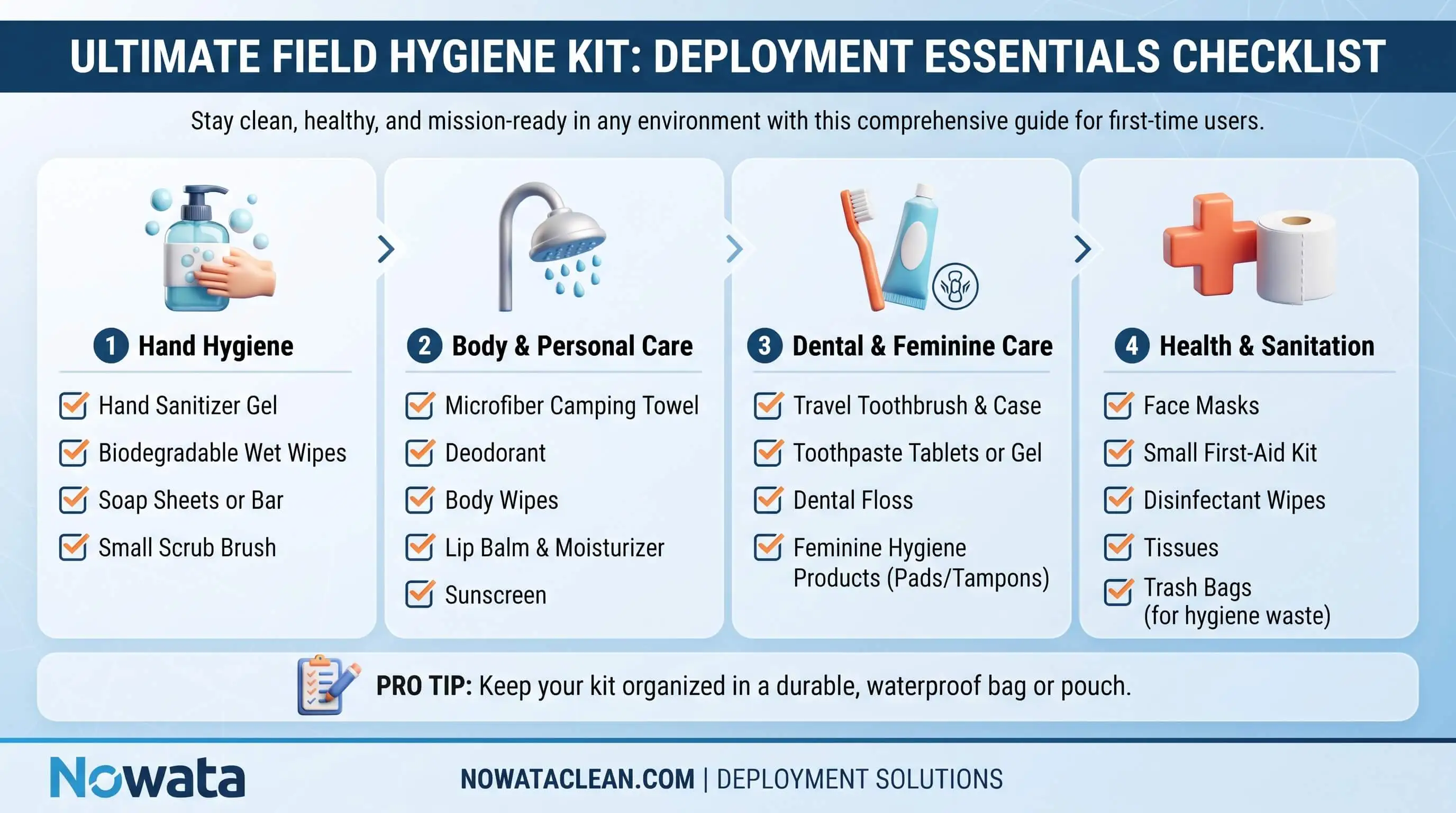
The Field Hygiene Kit Checklist
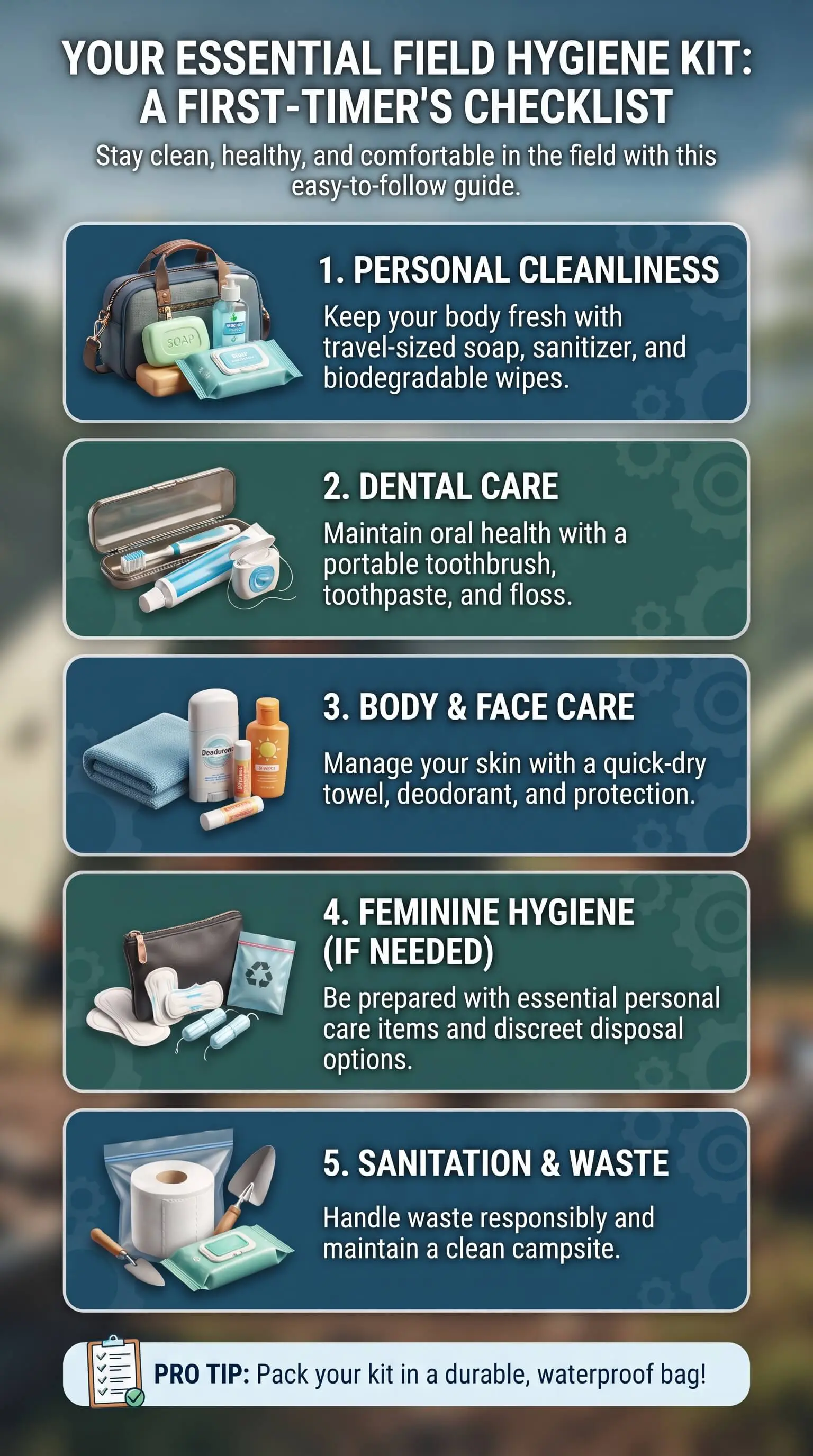
Work zone by zone. Cover every one before you add a single extra.
Hand Cleaning
Rinse-free soap: lifts dirt and oil without a sink
Small refillable bottle: for daily carry
Hand sanitizer: alcohol-based, at least 60% alcohol, as your backup
Nail brush
Nitrile gloves: for the dirty jobs
Hands are where field hygiene falls apart first, so this zone gets the most room. If you want the deeper version for training, deployment and fire crews, NOWATA's guide to field hygiene without water walks through how to keep hands clean using Waterless soap when every drop goes to drinking.
Oral Care
Travel toothbrush with a cover
Small tube of toothpaste
Floss
A sealed water pouch set aside only for rinsing
Body and Face
Unscented body wipes
Quick-dry microfiber towel
Dry shampoo
Unscented deodorant
Sunscreen and SPF lip balm
Foot Care
Spare socks: more than you think you'll need
Foot powder
Blister pads
Nail clippers
Waste and Pack-Out
Zip-top bags for used wipes and trash
Small trowel
Toilet paper in a dry bag
A little biodegradable soap for any rinsing near camp
Put it all in a waterproof pouch or dopp kit, label any bottle you refill, and tuck a printed copy of this list inside.
How to Build Your First Field Hygiene Kit in 5 Steps
Pick your container. Match it to how long you'll be out and how much room you've got. A day on a job site needs a pouch, and a week outdoors calls for a dopp kit.
Cover every zone first. Hands, mouth, body, feet and waste come before any extras.
Plan your water. Decide how much goes to drinking and how much goes to hygiene. Rinse-free products stretch both.
Do a test run. Use the kit for one full workday or one night out. You'll find out fast what's missing and what you never touched.
Set a restock rule. Check and refill the kit after every trip, so it's ready the next time you grab it.
When Hand Sanitizer Isn't Enough
Sanitizer earns its spot, but it has limits. The CDC advises against using it on hands that are visibly dirty or greasy, and it names gardening, playing outdoors, fishing and camping as examples. In those moments, you need to wash.
Rinse-free soap fills that gap because it's made to lift dirt and oil, not only germs, without running water. We see it as one tool in the kit and never a replacement for soap and water. If there's a sink nearby, use it.
How Much to Pack
Keep the math simple. Count how many times a day you'll clean your hands, multiply by the number of days, and check that total against the uses listed on your soap's label. NOWATA plans for about eight hand cleanings per person per day in the field, and that's a solid starting number for a first kit.
Adapting Your Kit
For Outdoor Work Crews
Add extra gloves and a nail brush, since soil, fertilizer and mulch work into skin and under nails fast. Keep the kit in the truck cab, not buried in the trailer.
For Camping and Backpacking
Pack light and pack it out. Wash at least 200 feet from lakes and streams, and use only a small amount of biodegradable soap for backpacking and hiking.
For Basic Training and Field Exercises
Start with your unit's packing list. Then fill the gaps with compact, unscented items.
For Emergency Go Bags
Add moist towelettes, garbage bags and plastic ties for personal sanitation. Plan your water for drinking and hygiene both.
Common First-Kit Mistakes
Full-size bottles that eat half the bag
Relying on hand sanitizer alone
Forgetting foot care until the blisters show up
Scented products that draw insects
Never restocking after a trip
"My first kit was all toiletries and no plan. By day two I'd burned through half my drinking water rinsing my hands, and the grime under my nails hadn't budged. Thinking in zones instead of products fixed that for me. Hands first, then mouth, then feet, then waste. Once each zone has one item you trust, the guessing stops. The kit that works for me has never been the biggest one. It's the one I tested on a hard, dirty day and refilled before the next."
7 Essential Resources
Field Hygiene and Sanitation (Wikipedia) Start here for where field hygiene comes from. It covers how the military treats illness prevention as part of keeping people healthy and ready to work.
About Handwashing (CDC) The CDC's plain-language rundown of when and how to wash your hands. Read it before you stock the hand zone.
Hand Sanitizer Guidelines and Recommendations (CDC) When sanitizer works, when it doesn't, and why grimy or greasy hands need washing instead. You'll also find the 60% alcohol minimum here.
Q&A for Consumers: Hand Sanitizers (FDA) The FDA answers common consumer questions and puts soap and water first, with sanitizer as the fallback.
Field Sanitation Standard 1928.110 (OSHA) The federal rule on handwashing, toilet and drinking water access for agricultural field workers. Crew leads planning hygiene on outdoor job sites will want this one.
Build a Kit (Ready.gov) The government's emergency supply list. Its personal sanitation items and water guidance make a strong base for the go-bag version of your kit.
Principle 3: Dispose of Waste Properly (Leave No Trace) Practical rules for washing outdoors, including the 200-foot buffer from lakes and streams. If your kit goes camping, read this first.
Supporting Statistics
Handwashing Education Cuts Diarrheal Illness by 23–40%
The CDC's Handwashing Facts report that teaching people to wash their hands lowers the number who get sick with diarrhea by 23–40%. A stomach bug can end a trip or wipe out a work week, so that number is why hands get packed first.
Handwashing Reduces Respiratory Illness by 16–21%
The same CDC data shows handwashing education cuts respiratory illnesses like colds by 16–21% in the general population. Outdoors you share tools, trucks and tents, and germs travel with them.
The Average Person Uses 80–100 Gallons of Water a Day at Home
The USGS estimates each person uses roughly 80 to 100 gallons a day for indoor household needs. In the field you might carry a few gallons for everything. Your kit has to work with almost nothing.
Good hand hygiene is essential when working outdoors, especially around soil, tools, and hard surfaces in garden design. According to the CDC, handwashing education can reduce diarrheal illnesses by 23–40% and respiratory illnesses by 16–21%. With limited water available in the field, packing effective hand-cleaning supplies helps maintain hygiene without wasting valuable drinking water.
Final Thoughts and Opinion
Our take: most first kits fail because people build them around products instead of needs. A travel toothbrush and a pack of wipes go in the bag, and the first truly filthy day shows what's missing.
We'd build by zone, test the kit once, and refill it every time you come home. Hand cleaning with Waterless hand soap gets top priority, since that's where field hygiene slips first and where it pays off most. Keep sanitizer in there too. Just don't lean on it when your hands are covered in soil or grease.
Your kit doesn't have to be big or expensive. It has to be ready when you are.
Frequently Asked Questions
Q: What Should Be in a Field Hygiene Kit?
A: Cover five zones: hands, mouth, body, feet and waste. In practice that means rinse-free soap and sanitizer, a toothbrush and toothpaste, body wipes and a quick-dry towel, spare socks and foot powder, plus bags and a trowel for pack-out. Start there and add extras later.
Q: How Do You Clean Your Hands in the Field Without Water?
A: Use a rinse-free soap that lifts dirt and oil without a sink, then wipe or air-dry. Keep alcohol-based sanitizer as a backup for hands that already look clean. When soap and running water are around, use them.
Q: Is Hand Sanitizer Enough for Field Hygiene?
A: Not by itself. The CDC advises against sanitizer on visibly dirty or greasy hands, which describes most hands after yard work, fishing or camping. It's handy between washes, but your kit also needs something that actually removes grime.
Q: What Is the Difference Between a Hygiene Kit and a First Aid Kit?
A: Your hygiene kit helps prevent illness and skin problems. Your first aid kit treats injuries after they happen. Gloves and wipes can overlap, but separate pouches make each one faster to grab.
Q: How Much Soap Should I Pack for a Week Outdoors?
A: Multiply your daily hand cleanings by the number of days, then compare the total with the uses on your soap's label. At about eight hand cleanings per person per day, a week comes to around 56 uses per person.
Q: Can I Use a Field Hygiene Kit for Landscaping or Job-Site Work?
A: Yes, and it's one of the best places for one. Soil, mulch and fertilizer work into skin and under nails, and plenty of job sites have no sink. Keep a kit with gloves, a nail brush and rinse-free soap in the truck.
Q: How Often Should I Restock My Field Hygiene Kit?
A: After every trip, or once a month if you use it daily. Check the dates on sunscreen and wipes, top off small bottles, and replace anything that got wet or crushed.
Pack Your First Field Hygiene Kit Today
Print the checklist, pull together what you already own, and fill the gaps one zone at a time. Then take the kit out for a test day before you actually need it.
For the hand-cleaning zone, read NOWATA's full guide to keeping hands clean in the field using all natural non toxic hand soap when every drop of water counts. Pack smarter before your next trip, shift or field exercise.


